 Java Web安全
BinCat V5 - 支持SpringBoot應用
BinCat V5 - 支持SpringBoot應用
時至今日(2020年9月),SpringBoot因其配置非常簡單功能強大,已經成為了絕大部分微服務項目的首選架構,Servlet 3+的新特性也為SpringBoot的便捷配置提供了非常大的幫助。我們將使用BinCat V5啟動并運行一個用SpringBoot實現的Blog應用,從而來學習Servlet容器的工作原理。
創建基于SpringBoot的javasec-blog項目
首先我們在javaweb-sec項目下創建一個javasec-test的模塊(用于存儲javasec文章所用到的測試項目),然后我們在javasec-test模塊中創建一個javasec-blog模塊(一個標準的SpringBoot項目),javasec-blog項目是一個用于演示的博客項目。
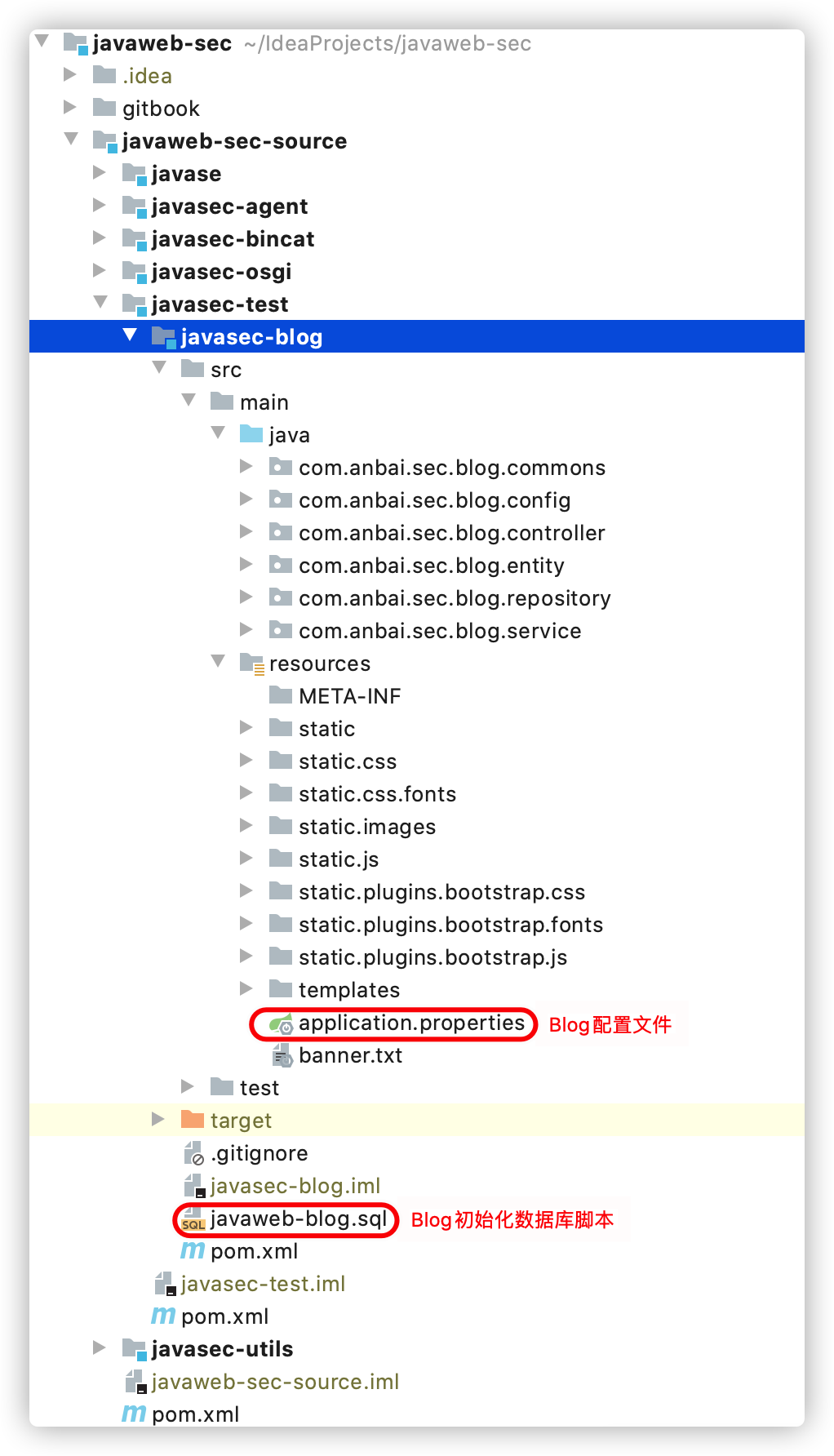
javasec-blog War項目構建
SpringBoot不但支持嵌入式部署也支持傳統的war包部署方式,但需要注意的是war包部署的時候需要做一些特殊的修改。BinCat目前只實現了基于war部署的方式,所以我們需要將javasec-blog打成一個war包。
構建項目的時候可參考如下步驟(1-3步默認已修改,不需要關注):
修改
pom.xml添加<packaging>war</packaging>,默認是jar。修改
pom.xml的build、plugins標簽,添加:<plugin> <groupId>org.apache.maven.plugins</groupId> <artifactId>maven-war-plugin</artifactId> <version>${maven-deploy-plugin.version}</version> <configuration> <failOnMissingWebXml>false</failOnMissingWebXml> </configuration> </plugin>修改
SpringBoot啟動類代碼,示例中是:JavaWebBlogApplication。繼承org.springframework.boot.web.servlet.support.SpringBootServletInitializer,然后重寫configure方法。如下:package com.anbai.sec.blog.config; import org.springframework.boot.SpringApplication; import org.springframework.boot.autoconfigure.SpringBootApplication; import org.springframework.boot.builder.SpringApplicationBuilder; import org.springframework.boot.web.servlet.support.SpringBootServletInitializer; /** * @author yz */ @SpringBootApplication(scanBasePackages = "com.anbai.sec.blog.*") public class JavaWebBlogApplication extends SpringBootServletInitializer { public static void main(String[] args) { SpringApplication.run(JavaWebBlogApplication.class, args); } @Override protected SpringApplicationBuilder configure(SpringApplicationBuilder builder) { return builder.sources(JavaWebBlogApplication.class); } }修改
javaweb-sec-source/javasec-test/javasec-blog/src/main/resources/application.properties配置文件中的數據庫信息。新建
Mysql數據庫javaweb-blog,并導入javaweb-sec-source/javasec-test/javaweb-blog.sql。使用
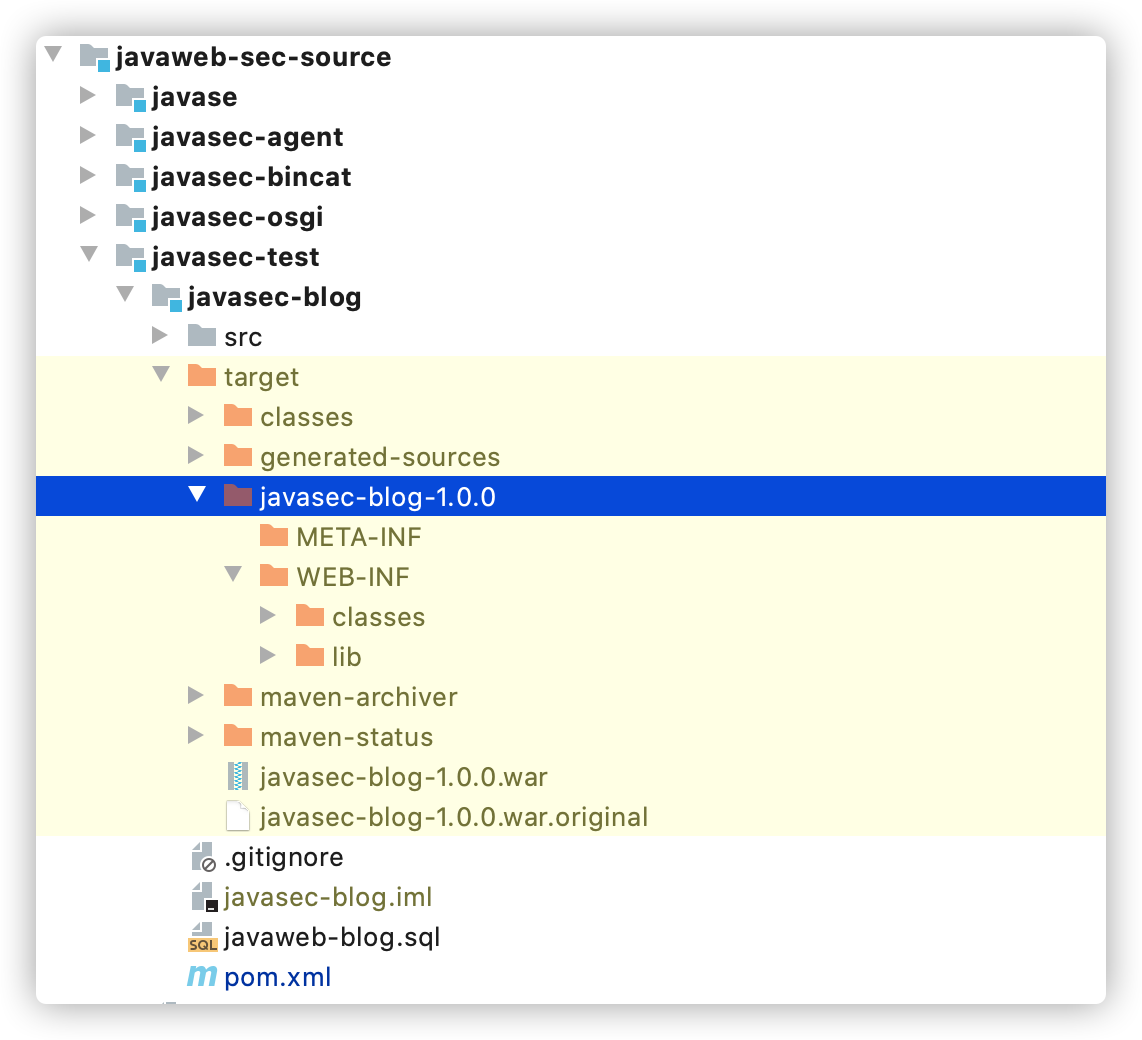
maven命令構建整個javaweb-sec項目(第二次構建的時候可以單獨build blog項目),在javaweb-sec根目錄執行:mvn clean install。
項目構建成功后結構如下:
BinCat V5實現
因為V5要實現正常的運行一個SpringBoot項目,所以我們需要寫一個支持單應用的Servlet容器,而且還需要實現之前版本未實現的其他Servlet接口。
BinCatWebAppClassLoader實現
為了實現加載Web應用的資源和類文件,我們需要實現一個類簡單的加載器,用于加載WEB-INF目錄下的classes和libs中的所有文件。
BinCatWebAppClassLoader代碼:
package com.anbai.sec.server.loader;

import java.net.URL;
import java.net.URLClassLoader;

public class BinCatWebAppClassLoader extends URLClassLoader {

    public BinCatWebAppClassLoader(URL[] urls, ClassLoader parent) {
        super(urls, parent);
    }

}為了統一加載Web應用的資源文件,我們還需要將BinCatWebAppClassLoader的類示例設置為當前線程的類加載器,如下:
// 定義需要加載的Web應用路徑,默認配置的路徑必須先使用maven編譯:javasec-blog項目
String webAppFile = System.getProperty("user.dir") +
  "/javaweb-sec-source/javasec-test/javasec-blog/target/javasec-blog-1.0.0/";

// 創建BinCatWebAppClassLoader,加載Web應用
BinCatWebAppClassLoader appClassLoader = BinCatConfig.createAppClassLoader(webAppFile);

// 設置當前線程的上下文類加載器
Thread.currentThread().setContextClassLoader(appClassLoader);這樣一來在整個Web應用(示例中指的是javasec-blog項目)默認將會使用BinCatWebAppClassLoader來實現資源文件和類文件的加載了。
BinCatWebAppClassLoader初始化
BinCatWebAppClassLoader在初始化的時候需要加載所有應用的WEB-INF目錄的類和資源文件,但由于V5版本我們只想實現單應用的部署,所以我們只需要加載我們預設好的Web應用目錄就好了。在初始化BinCatWebAppClassLoader的時候將WEB-INF/classes目錄和WEB-INF/libs目錄下的所有jar文件都添加到BinCatWebAppClassLoader當中。
BinCatWebAppClassLoader創建并加載Web應用資源代碼:
public static BinCatWebAppClassLoader createAppClassLoader(String webAppFile) throws IOException {
   File     webRoot      = new File(webAppFile);
   File     webInfoDir   = new File(webRoot, "WEB-INF");
   File     libDir       = new File(webInfoDir, "lib");
   File     classesDir   = new File(webInfoDir, "classes");
   Set<URL> classPathURL = new HashSet<>();

   File[] libs = libDir.listFiles(new FilenameFilter() {
      @Override
      public boolean accept(File dir, String name) {
         return name.endsWith(".jar");
      }
   });

   // 加載lib目錄下所有的jar文件
   for (File lib : libs) {
      classPathURL.add(lib.toURL());
   }

   // 加載classes目錄的所有資源文件
   classPathURL.add(classesDir.toURL());

   // 創建Web應用的類加載器
   return new BinCatWebAppClassLoader(
         classPathURL.toArray(new URL[classPathURL.size()]), BinCatConfig.class.getClassLoader()
   );
}
BinCatServletContext實現
在V4版本中我們雖然已經實現了一個BinCatServletContext,但是我們并沒有實現Servlet的動態注冊功能,而且V4實現的Servlet注冊和初始化過程都是靜態的,我們需要將整個過程升級為動態的。
- 為了能夠在
BinCatServletContext中獲取到我們自定義的Web應用的類加載器,我們需要在創建BinCatServletContext的時候將將其緩存到類對象中。 - 創建一個
Map<String, Servlet> servletMap和Set<BinCatServletRegistrationDynamic> registrationDynamics對象用于緩存動態注冊的Servlet。 - 創建一個
Map<String, String> initParameterMap對象用于記錄ServletContext初始化參數。 - 創建一個
Map<String, Object> attributeMap,用于記錄ServletContext中的屬性對象(attribute)。
BinCatServletContext代碼:
package com.anbai.sec.server.servlet;

import com.anbai.sec.server.loader.BinCatWebAppClassLoader;

import javax.servlet.*;
import javax.servlet.descriptor.JspConfigDescriptor;
import java.io.File;
import java.io.InputStream;
import java.net.MalformedURLException;
import java.net.URL;
import java.util.*;

public class BinCatServletContext implements ServletContext {

    // 創建一個裝動態注冊的Servlet的Map
    private final Map<String, Servlet> servletMap = new HashMap<>();

    // 創建一個裝ServletContext初始化參數的Map
    private final Map<String, String> initParameterMap = new HashMap<>();

    // 創建一個裝ServletContext屬性對象的Map
    private final Map<String, Object> attributeMap = new HashMap<>();

    // 創建一個裝Servlet動態注冊的Set
    private final Set<BinCatServletRegistrationDynamic> registrationDynamics = new LinkedHashSet<>();

    // BinCatWebAppClassLoader,Web應用的類加載器
    private final BinCatWebAppClassLoader appClassLoader;

  // 此處省略ServletContext接口中的大部分方法,僅保留幾個實現了的示例方法...

    public BinCatServletContext(BinCatWebAppClassLoader appClassLoader) throws Exception {
        this.appClassLoader = appClassLoader;
    }

    @Override
    public Servlet getServlet(String name) throws ServletException {
        return servletMap.get(name);
    }

    @Override
    public Enumeration<Servlet> getServlets() {
        Set<Servlet> servlets = new HashSet<Servlet>(servletMap.values());
        return Collections.enumeration(servlets);
    }

    @Override
    public Enumeration<String> getServletNames() {
        Set<String> servlets = new HashSet<String>(servletMap.keySet());
        return Collections.enumeration(servlets);
    }

    @Override
    public String getRealPath(String path) {
        return new File(System.getProperty("user.dir"), path).getAbsolutePath();
    }

    public Map<String, String> getInitParameterMap() {
        return initParameterMap;
    }

    @Override
    public String getInitParameter(String name) {
        return initParameterMap.get(name);
    }

    @Override
    public Enumeration<String> getInitParameterNames() {
        return Collections.enumeration(initParameterMap.keySet());
    }

    @Override
    public boolean setInitParameter(String name, String value) {
        if (!initParameterMap.containsKey(name)) {
            initParameterMap.put(name, value);

            return true;
        }

        return false;
    }

    @Override
    public Object getAttribute(String name) {
        return attributeMap.get(name);
    }

    @Override
    public Enumeration<String> getAttributeNames() {
        return Collections.enumeration(attributeMap.keySet());
    }

    @Override
    public void setAttribute(String name, Object object) {
        attributeMap.put(name, object);
    }

    @Override
    public void removeAttribute(String name) {
        attributeMap.remove(name);
    }

    @Override
    public ServletRegistration.Dynamic addServlet(String servletName, Servlet servlet) {
        servletMap.put(servletName, servlet);

        BinCatServletRegistrationDynamic dynamic = new BinCatServletRegistrationDynamic(servletName, servlet, this);
        registrationDynamics.add(dynamic);

        return dynamic;
    }

    @Override
    public ClassLoader getClassLoader() {
        return this.appClassLoader;
    }

    public Map<String, Servlet> getServletMap() {
        return servletMap;
    }

    public Set<BinCatServletRegistrationDynamic> getRegistrationDynamics() {
        return registrationDynamics;
    }

}
BinCatServletContext初始化
在初始化BinCatServletContext時我們通過手動注冊Servlet的方式初始化了幾個容器內置的Servlet,并通過掃描初始化Servlet類注解的方式將Servlet在BinCatServletContext中注冊。
BinCatServletContext初始化代碼:
/**
    * 手動注冊Servlet并創建BinCatServletContext對象
    *
    * @param appClassLoader 應用的類加載器
    * @return ServletContext Servlet上下文對象
    */
   public static BinCatServletContext createServletContext(BinCatWebAppClassLoader appClassLoader) throws Exception {
      BinCatServletContext servletContext = new BinCatServletContext(appClassLoader);

      // 手動注冊Servlet類
      Class<Servlet>[] servletClass = new Class[]{
            TestServlet.class,
            CMDServlet.class,
            QuercusPHPServlet.class
      };

      for (Class<Servlet> clazz : servletClass) {
         Servlet    servlet    = clazz.newInstance();
         WebServlet webServlet = clazz.getAnnotation(WebServlet.class);

         if (webServlet != null) {
            // 獲取WebInitParam配置
            WebInitParam[] webInitParam = webServlet.initParams();

            // 動態創建Servlet對象
            ServletRegistration.Dynamic dynamic = servletContext.addServlet(webServlet.name(), servlet);

            // 動態設置Servlet映射地址
            dynamic.addMapping(webServlet.urlPatterns());

            // 設置Servlet啟動參數
            for (WebInitParam initParam : webInitParam) {
               dynamic.setInitParameter(initParam.name(), initParam.value());
            }
         }
      }

      // 創建ServletContext
      return servletContext;
   }
BinCatServletRegistrationDynamic實現
BinCatServletContext中核心的是addServlet方法的動態注冊Servlet,如下:
@Override
public ServletRegistration.Dynamic addServlet(String servletName, Servlet servlet) {
  servletMap.put(servletName, servlet);

  BinCatServletRegistrationDynamic dynamic = new BinCatServletRegistrationDynamic(servletName, servlet, this);
  registrationDynamics.add(dynamic);

  return dynamic;
}當Web應用調用addServlet注冊一個Servlet對象時會返回一個ServletRegistration.Dynamic對象,通過這個Dynamic對象可以設置Servlet的映射信息和初始化信息。但因為ServletRegistration.Dynamic是一個接口,所以我們必須實現此接口的所有方法。
BinCatServletRegistrationDynamic代碼:
package com.anbai.sec.server.servlet;

import javax.servlet.MultipartConfigElement;
import javax.servlet.Servlet;
import javax.servlet.ServletRegistration;
import javax.servlet.ServletSecurityElement;
import java.util.*;

public class BinCatServletRegistrationDynamic implements ServletRegistration.Dynamic {

    private final String servletName;

    private final Set<String> servletMapping = new LinkedHashSet<>();

    private final Map<String, String> initParametersMap = new HashMap<>();

    private final Servlet servlet;

    private final BinCatServletContext servletContext;

    public BinCatServletRegistrationDynamic(String servletName, Servlet servlet, BinCatServletContext servletContext) {
        this.servletName = servletName;
        this.servlet = servlet;
        this.servletContext = servletContext;
    }

    @Override
    public void setLoadOnStartup(int loadOnStartup) {

    }

    @Override
    public Set<String> setServletSecurity(ServletSecurityElement constraint) {
        return null;
    }

    @Override
    public void setMultipartConfig(MultipartConfigElement multipartConfig) {

    }

    @Override
    public void setRunAsRole(String roleName) {

    }

    @Override
    public void setAsyncSupported(boolean isAsyncSupported) {

    }

    @Override
    public Set<String> addMapping(String... urlPatterns) {
        Collections.addAll(servletMapping, urlPatterns);

        return servletMapping;
    }

    @Override
    public Collection<String> getMappings() {
        return servletMapping;
    }

    @Override
    public String getRunAsRole() {
        return null;
    }

    @Override
    public String getName() {
        return servletName;
    }

    @Override
    public String getClassName() {
        return servlet.getClass().getName();
    }

    @Override
    public boolean setInitParameter(String name, String value) {
        if (!initParametersMap.containsKey(name)) {
            initParametersMap.put(name, value);

            return true;
        }

        return false;
    }

    @Override
    public String getInitParameter(String name) {
        return initParametersMap.get(name);
    }

    @Override
    public Set<String> setInitParameters(Map<String, String> initParameters) {
        initParametersMap.putAll(initParameters);

        return initParametersMap.keySet();
    }

    @Override
    public Map<String, String> getInitParameters() {
        return initParametersMap;
    }

    public Servlet getServlet() {
        return servlet;
    }

    public String getServletName() {
        return servletName;
    }

}
實現Web應用的啟動
在啟動我們的示例應用之前我們已經創建了一個BinCatWebAppClassLoader和BinCatServletContext,其中BinCatWebAppClassLoader已經加載了javasec-blog項目的WEB-INF信息、BinCatServletContext也初始化了幾個BinCat內置的Servlet。萬事俱備,我們現在只欠如何啟動Servlet容器了。
從Servlet3.0開始,Servlet除了可以從web.xml啟動,還可以通過SPI機制動態獲取ServletContainerInitializer(簡稱SCI)并通過SCI啟動Servlet容器。因為V5并未打算實現傳統的web.xml啟動方式,而是只想實現SCI啟動方式(這也是SpringBoot以war包部署的啟動方式)。
ServletContainerInitializer是一個接口類,僅定義了一個叫onStartup的方法,所有實現了該接口的類只要重寫onStartup方法將可以實現Servlet容器的啟動。
ServletContainerInitializer代碼:
package javax.servlet;

import java.util.Set;

/**
 * Interface which allows a library/runtime to be notified of a web
 * application's startup phase and perform any required programmatic
 * registration of servlets, filters, and listeners in response to it.
 *
 * <p>Implementations of this interface may be annotated with
 * {@link javax.servlet.annotation.HandlesTypes HandlesTypes}, in order to
 * receive (at their {@link #onStartup} method) the Set of application
 * classes that implement, extend, or have been annotated with the class
 * types specified by the annotation.
 *
 * <p>If an implementation of this interface does not use <tt>HandlesTypes</tt>
 * annotation, or none of the application classes match the ones specified
 * by the annotation, the container must pass a <tt>null</tt> Set of classes
 * to {@link #onStartup}.
 *
 * <p>When examining the classes of an application to see if they match
 * any of the criteria specified by the <tt>HandlesTypes</tt> annontation
 * of a <tt>ServletContainerInitializer</tt>, the container may run into
 * classloading problems if any of the application's optional JAR
 * files are missing. Because the container is not in a position to decide
 * whether these types of classloading failures will prevent
 * the application from working correctly, it must ignore them,
 * while at the same time providing a configuration option that would
 * log them.
 *
 * <p>Implementations of this interface must be declared by a JAR file
 * resource located inside the <tt>META-INF/services</tt> directory and
 * named for the fully qualified class name of this interface, and will be
 * discovered using the runtime's service provider lookup mechanism
 * or a container specific mechanism that is semantically equivalent to
 * it. In either case, <tt>ServletContainerInitializer</tt> services from web
 * fragment JAR files excluded from an absolute ordering must be ignored,
 * and the order in which these services are discovered must follow the
 * application's classloading delegation model.
 *
 * @see javax.servlet.annotation.HandlesTypes
 *
 * @since Servlet 3.0
 */
public interface ServletContainerInitializer {

    /**
     * Notifies this <tt>ServletContainerInitializer</tt> of the startup
     * of the application represented by the given <tt>ServletContext</tt>.
     *
     * <p>If this <tt>ServletContainerInitializer</tt> is bundled in a JAR
     * file inside the <tt>WEB-INF/lib</tt> directory of an application,
     * its <tt>onStartup</tt> method will be invoked only once during the
     * startup of the bundling application. If this
     * <tt>ServletContainerInitializer</tt> is bundled inside a JAR file
     * outside of any <tt>WEB-INF/lib</tt> directory, but still
     * discoverable as described above, its <tt>onStartup</tt> method
     * will be invoked every time an application is started.
     *
     * @param c the Set of application classes that extend, implement, or
     * have been annotated with the class types specified by the
     * {@link javax.servlet.annotation.HandlesTypes HandlesTypes} annotation,
     * or <tt>null</tt> if there are no matches, or this
     * <tt>ServletContainerInitializer</tt> has not been annotated with
     * <tt>HandlesTypes</tt>
     *
     * @param ctx the <tt>ServletContext</tt> of the web application that
     * is being started and in which the classes contained in <tt>c</tt>
     * were found
     *
     * @throws ServletException if an error has occurred
     */
    public void onStartup(Set<Class<?>> c, ServletContext ctx)
        throws ServletException;
}因為BinCatWebAppClassLoader已經加載了示例項目的所有資源文件,所以我們可以使用BinCatWebAppClassLoader來獲取到示例項目中的所有路徑為:META-INF/services/javax.servlet.ServletContainerInitializer的資源文件。
BinCatWebAppClassLoader classLoader    = (BinCatWebAppClassLoader) servletContext.getClassLoader();
String                  servletService = "META-INF/services/javax.servlet.ServletContainerInitializer";

// 獲取當前ClassLoader中的所有ServletContainerInitializer配置
Enumeration<URL> resources = classLoader.getResources(servletService);SCI資源文件中配置的是實現了SCI接口的Java類,一個SCI資源文件可能會配置多個實現類(多個類以換行分割)。讀取到SCI資源文件后我們將可以使用反射的方式去加載資源文件中配置的Java類了。
讀取SCI配置并加載SCI實現類示例:
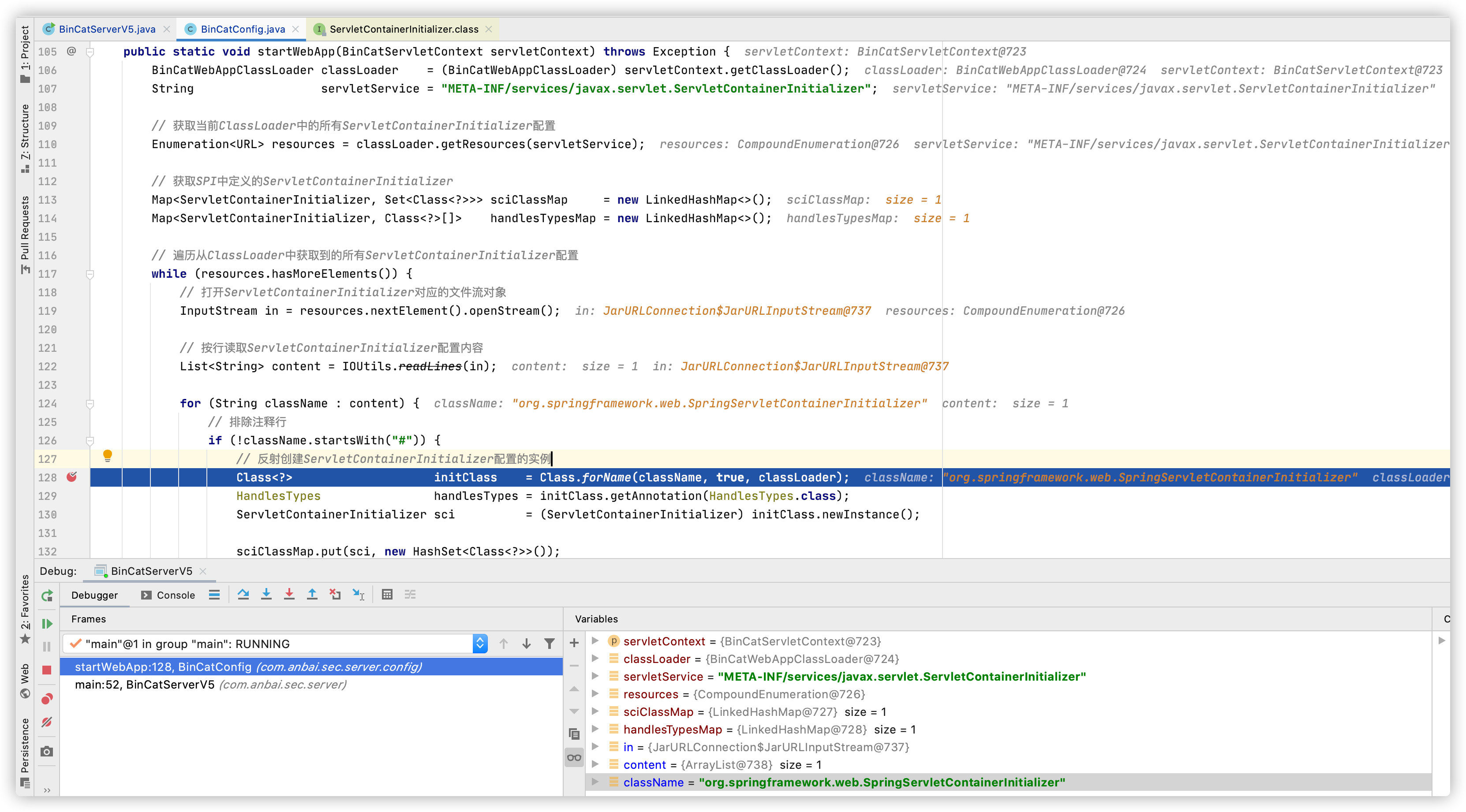
上圖示例中可以看到我們通過讀取BinCatWebAppClassLoader中的SCI資源時獲取到了一個類名為:org.springframework.web.SpringServletContainerInitializer的類。SpringServletContainerInitializer實現了ServletContainerInitializer,所以想要啟動示例的SpringBoot項目僅需要調用該類的onStartup方法將可以了。onStartup方法需要兩個參數:Set<Class<?>> c和ServletContext ctx,即可SCI啟動類對象集合和Servlet上下文。因為ServletContext我們可以輕易的獲取到,所以我們重點是如何獲取到SCI啟動類對象集合了。
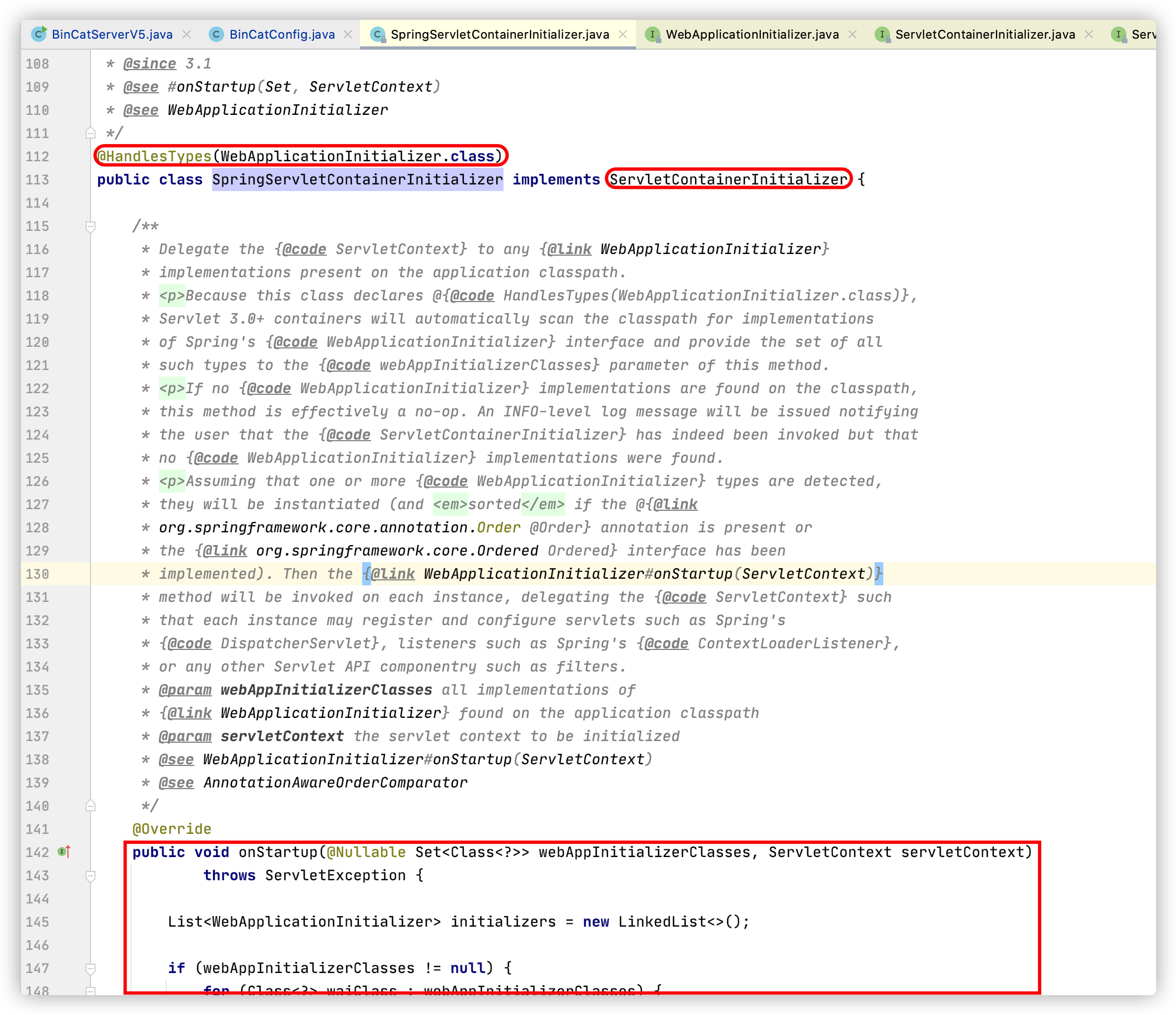
通過閱讀源碼不難發現,在實現了SCI的接口類類名上會有一個叫做@HandlesTypes的注解,讀取到這個注解的值將可以找到處理SCI啟動類對象集合的類對象,然后反向去找該類對象的實現類將可以找到所有需要被SCI啟動的類數組了。
SpringServletContainerInitializer示例:
創建SCI實現類示例和獲取該示例的HandlesTypes配置方式如下:
Class<?>    initClass                        = Class.forName(className, true, classLoader);
HandlesTypes    handlesTypes             = initClass.getAnnotation(HandlesTypes.class);
ServletContainerInitializer sci = (ServletContainerInitializer) initClass.newInstance();

sciClassMap.put(sci, new HashSet<Class<?>>());

if (handlesTypes != null) {
  Class[] handlesClass = handlesTypes.value();

  handlesTypesMap.put(sci, handlesClass);
}獲取到@HandlesTypes配置的類名后剩下的就是如何在示例項目中的所有類中找出@HandlesTypes配置的類實例了,如上圖中SpringServletContainerInitializer配置的@HandlesTypes是WebApplicationInitializer,那么我們現在就必須通過掃包和類文件的方式找出所有WebApplicationInitializer的子類,然后再通過上一步創建出來的SCI實例調用onStartup方法完成Servlet容器啟動。
為了掃描當前類加載所有的類對象,我們需要先獲取出當前類加載加載的所有的類名稱,然后再依次掃描這些類是否是@HandlesTypes中配置的類(如:WebApplicationInitializer)的子類。
獲取BinCatWebAppClassLoader加載的所有的類名代碼:
/**
 * 獲取BinCatWebAppClassLoader類加載器加載的所有class類名
 *
 * @param classLoader     類加載器
 * @param sciClassMap     SCI類對象
 * @param handlesTypesMap SCI類對象配置的HandlesTypes對象映射Map
 * @return
 * @throws Exception
 */
private static void findInitializerClass(
  BinCatWebAppClassLoader classLoader,
  Map<ServletContainerInitializer, Set<Class<?>>> sciClassMap,
  Map<ServletContainerInitializer, Class<?>[]> handlesTypesMap) throws Exception {

  // 創建一個存儲所有被BinCatWebAppClassLoader加載的類名稱對象
  Set<String> classList = new HashSet<>();

  // 獲取BinCatWebAppClassLoader加載的所有URL地址
  URL[] urls = classLoader.getURLs();

  for (URL url : urls) {
    File file = new File(url.toURI());

    // 遍歷所有的jar文件
    if (file.isFile() && file.getName().endsWith(".jar")) {
      JarFile               jarFile  = new JarFile(file);
      Enumeration<JarEntry> jarEntry = jarFile.entries();

      while (jarEntry.hasMoreElements()) {
        JarEntry entry    = jarEntry.nextElement();
        String   fileName = entry.getName();

        // 遍歷jar文件中的所有class文件,并轉換成java類名格式,如com/anbai/Test.class會轉換成com.anbai.Test
        if (fileName.endsWith(".class")) {
          String className = fileName.replace(".class", "").replace("/", ".");
          classList.add(className);
        }
      }
    } else if (file.isDirectory()) {
      // 遍歷所有classes目錄下的.class文件,并轉換成java類名格式
      Collection<File> files = FileUtils.listFiles(file, new String[]{"class"}, true);

      for (File classFile : files) {
        String className = classFile.toString().substring(file.toString().length())
          .replace(".class", "").replaceAll("^/", "").replace("/", ".");

        classList.add(className);
      }
    }
  }

  // 通過ASM方式獲取所有Java類的繼承關系,并判斷是否是HandlesTypes配置中的類的子類
  for (String className : classList) {
    // 通過ASM的方式獲取當前類的所有父類(包括繼承和實現的所有類)
    Set<String> superClassList = ClassUtils.getSuperClassListByAsm(className, classLoader);

    // 遍歷所有HandlesTypes配置
    for (ServletContainerInitializer sci : handlesTypesMap.keySet()) {
      // 獲取HandlesTypes配置的類數組對象
      Class[] handlesTypesClass = handlesTypesMap.get(sci);

      // 遍歷所有HandlesTypes配置的類數組對象
      for (Class typesClass : handlesTypesClass) {
        // 獲取HandlesTypes配置的類名稱
        String typeClassName = typesClass.getName();

        // 檢測當前Java類是否是HandlesTypes配置的類的子類,如果是就記錄下來
        if (superClassList.contains(typeClassName) && !className.equals(typeClassName)) {
          // 獲取SCI啟動類對象集合
          Set<Class<?>> sciClass = sciClassMap.get(sci);

          // 反射加載當前類對象
          Class clazz = classLoader.loadClass(className);

          // 將找到的SCI啟動類添加到集合中
          sciClass.add(clazz);
        }
      }
    }
  }
}整個掃包過程會比較緩慢,因為一次性掃描了1萬多個類,并且還是用ASM解析了這1萬多個類的繼承關系。最終我們將會得出一個Map<ServletContainerInitializer, Set<Class<?>>> sciClassMap對象,我們通過遍歷這個sciClassMap并依次調用onStartup方法即可實現Servlet容器的啟動。
啟動所有SCI代碼:
for (ServletContainerInitializer initializer : sciClassMap.keySet()) {
  Set<Class<?>> initClassSet = sciClassMap.get(initializer);

  // 調用Servlet容器初始化的onStartup方法,啟動容器
  initializer.onStartup(initClassSet, servletContext);
}
initializer.onStartup(initClassSet, servletContext);因為傳入了ServletContext,所以initializer很有可能會通過ServletContext動態注冊一些Filter、Servlet、Listener,而這些Filter、Servlet、Listener和我們BinCat的內置的Servlet都處于未初始化的狀態,這個時候我們就必須要做一些初始化工作(V5版本只支持Servlet,并不支持Filter和Listener)了。
初始化ServletContext中的所有Servlet代碼:
initServlet(servletContext);完成以上所有邏輯后我們的BinCat也就算啟動成功了,剩下的就是如何處理瀏覽器請求了。
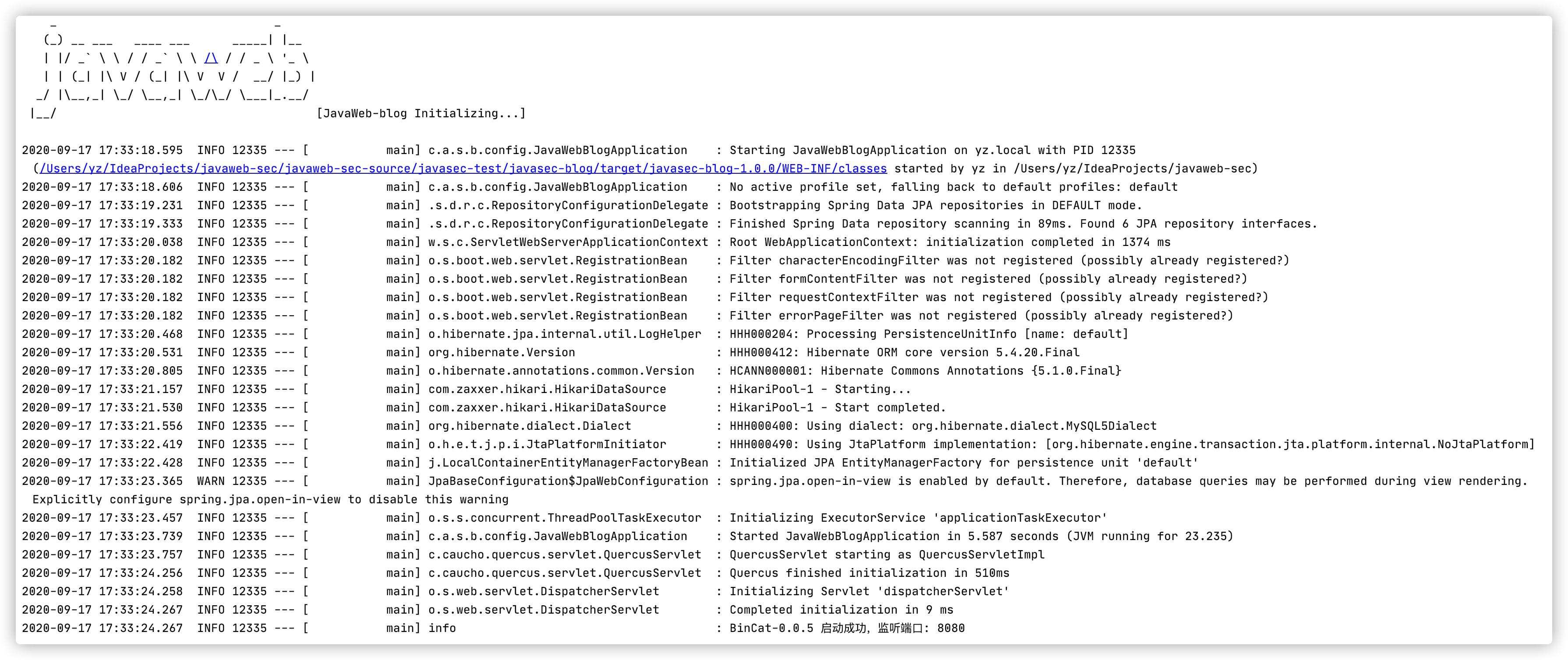
Servlet請求處理
V5依舊是根據瀏覽器請求的URL地址調用對應的Servlet的service方法處理Servlet請求,訪問javasec-blog首頁測試:http://localhost:8080/
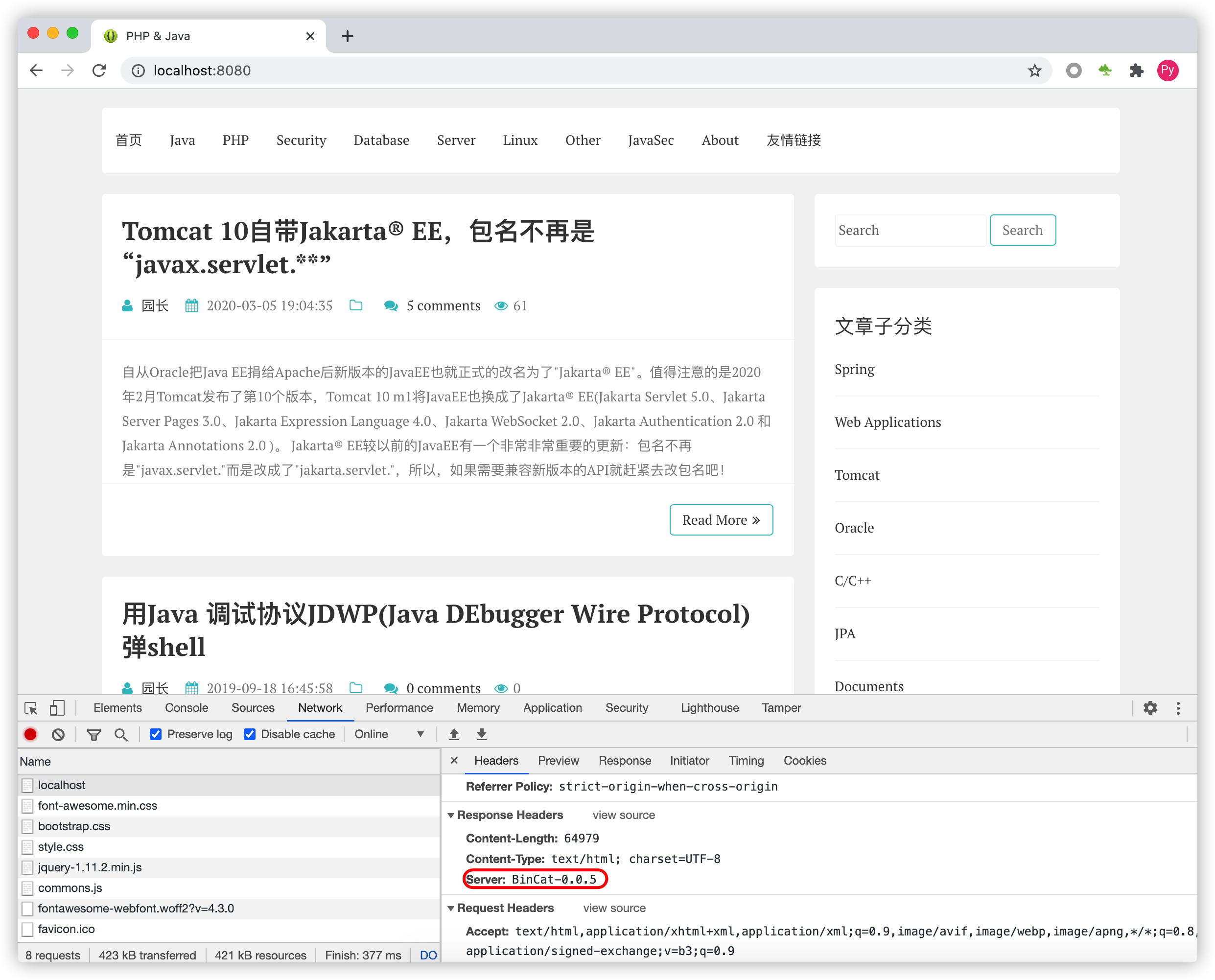
請求的/最終會調用SpringMVC的org.springframework.web.servlet.DispatcherServlet類處理請求,如下:
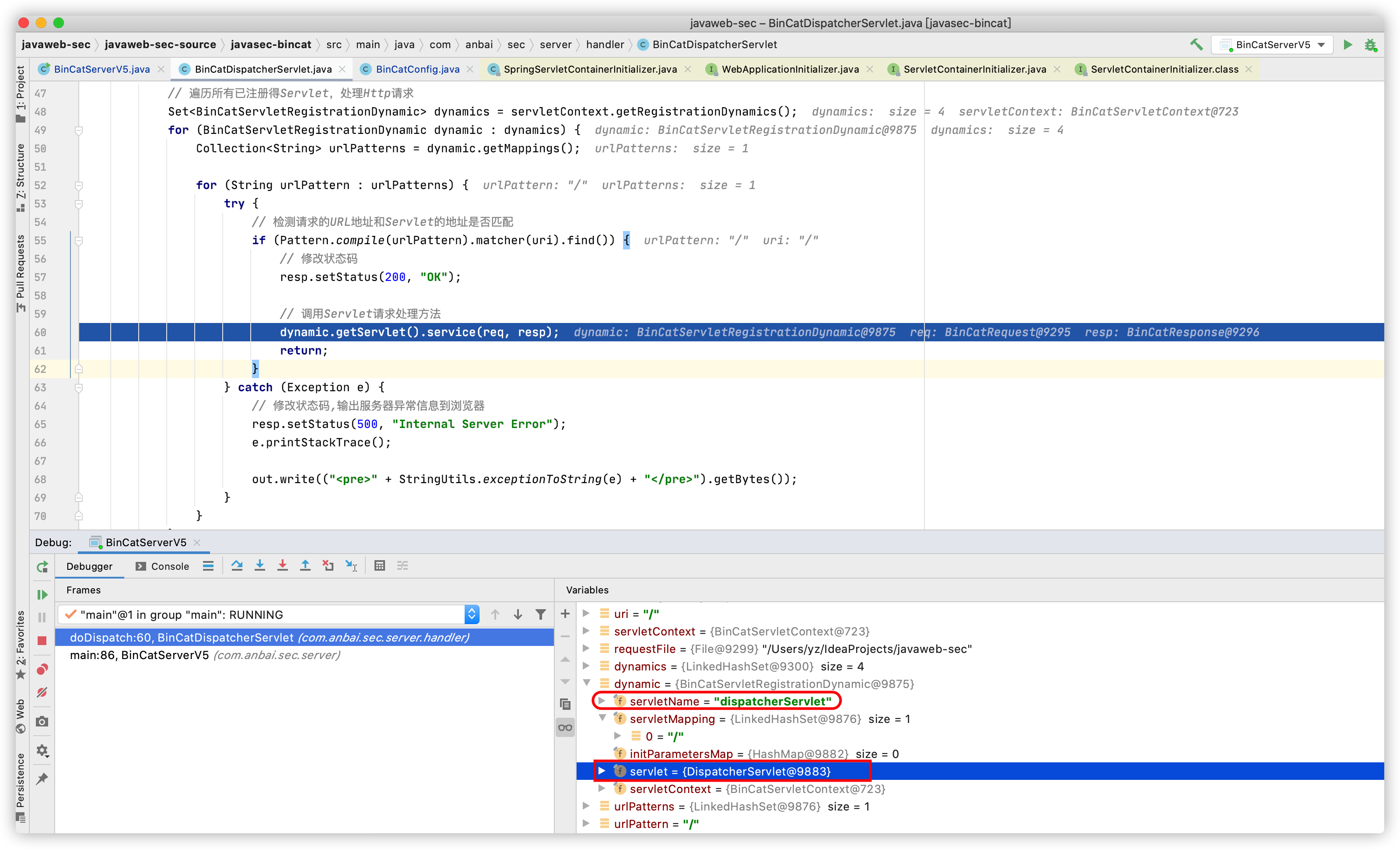
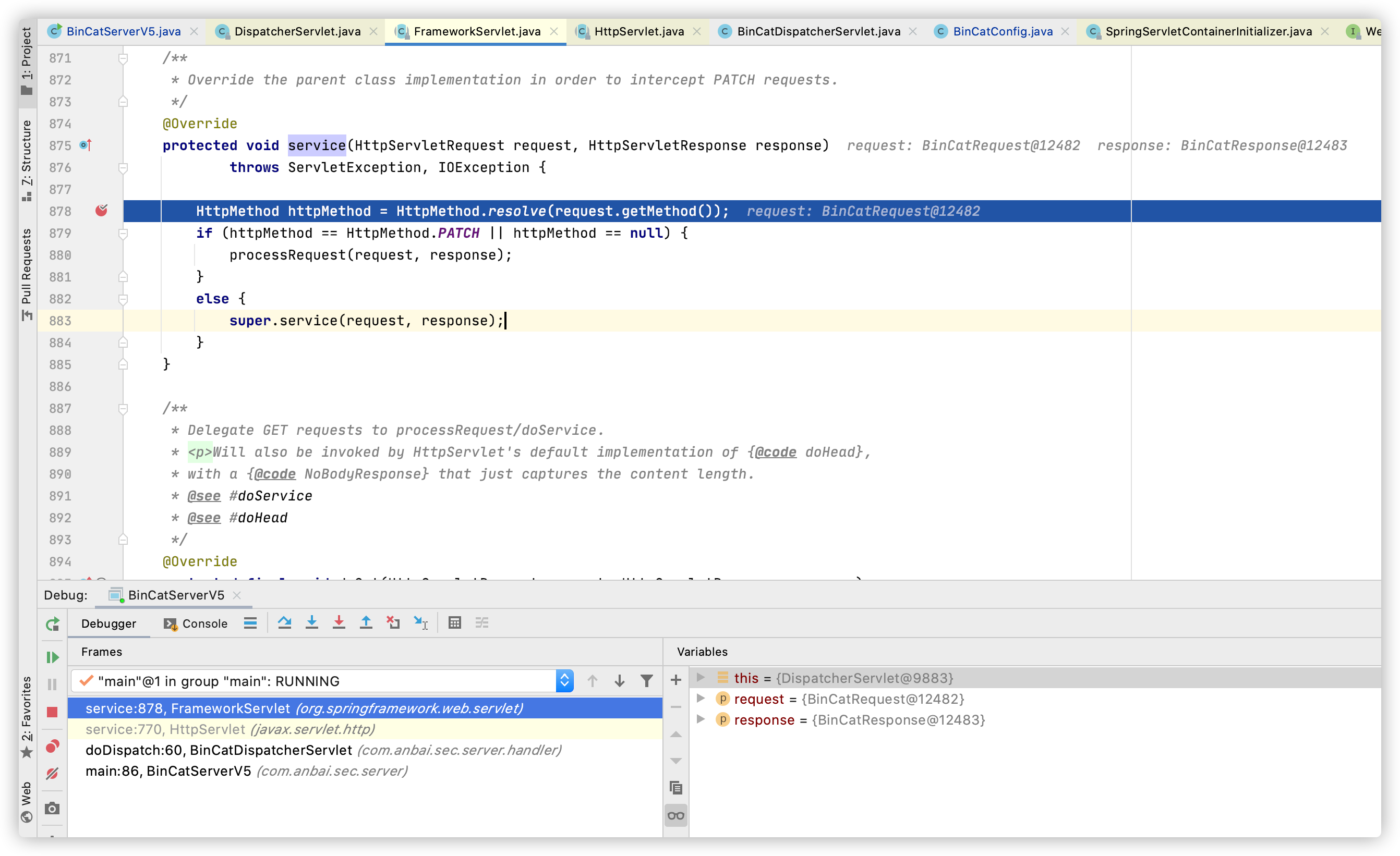
dynamic.getServlet().service(req, resp)最終會調用Spring的DispatcherServlet類的父類org.springframework.web.servlet.FrameworkServlet的service方法,如下:
訪問文章詳情頁測試:http://localhost:8080/?p=12
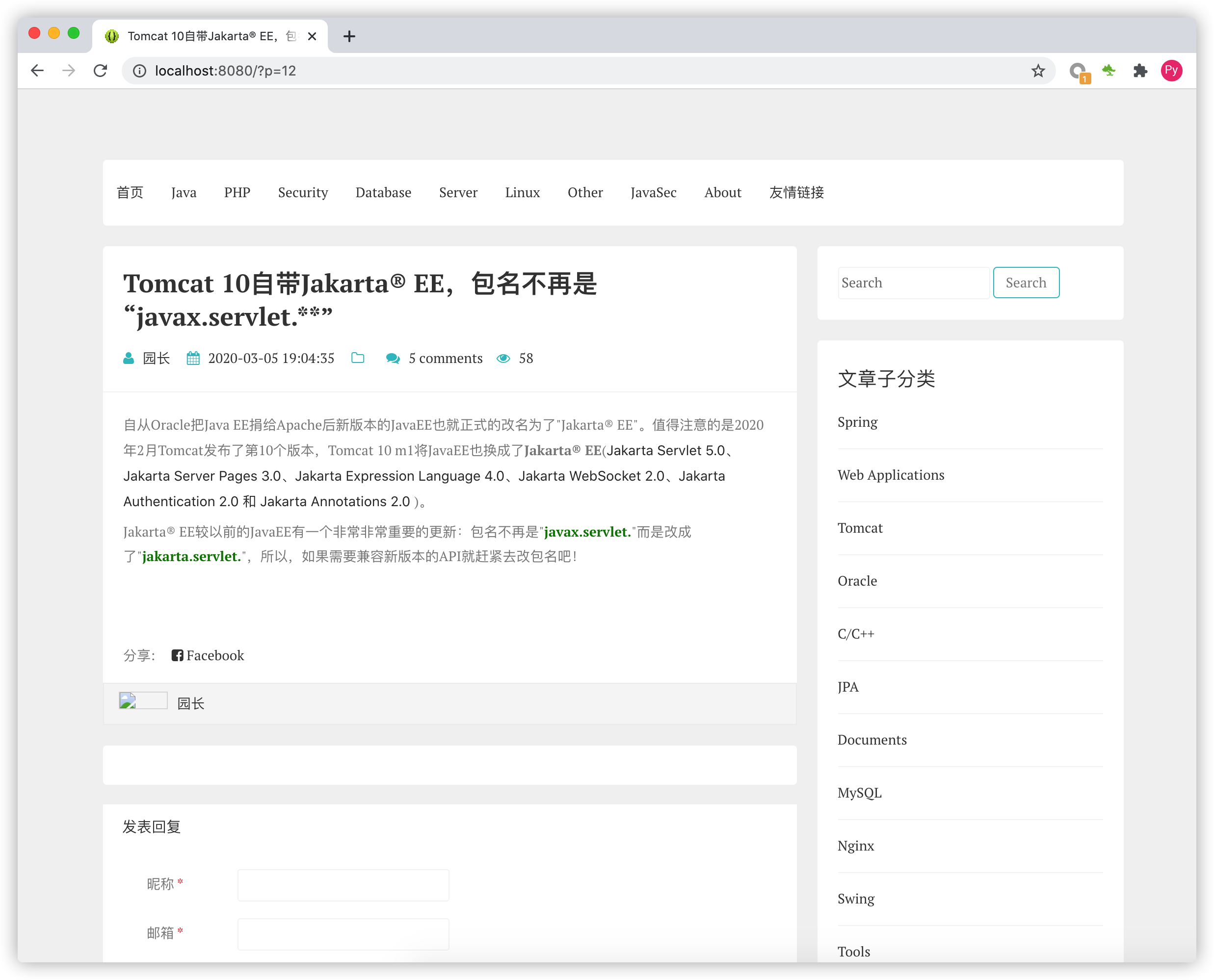
至此,耗時大約一周時間,我們的BinCat從支持解析簡單的HelloWorld到如今已經實現了啟動單Web應用的SpringBoot了,當然這里面充斥這各種各樣的Bug和安全問題,我們的目標并不是實現一個國產化Java中間件,而是將BinCat變成一個存在各種各樣漏洞的靶場。
