一、實例版本
2022.6.8: go version go1.18.3 windows/amd64
高版本適用 1.20
二、還原過程
搜索 go.build
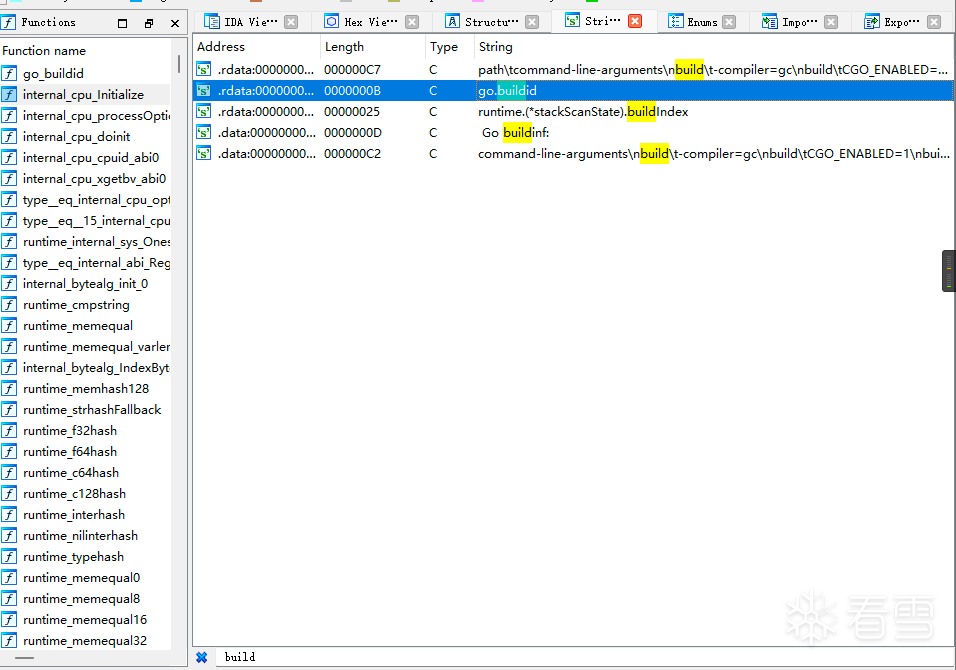
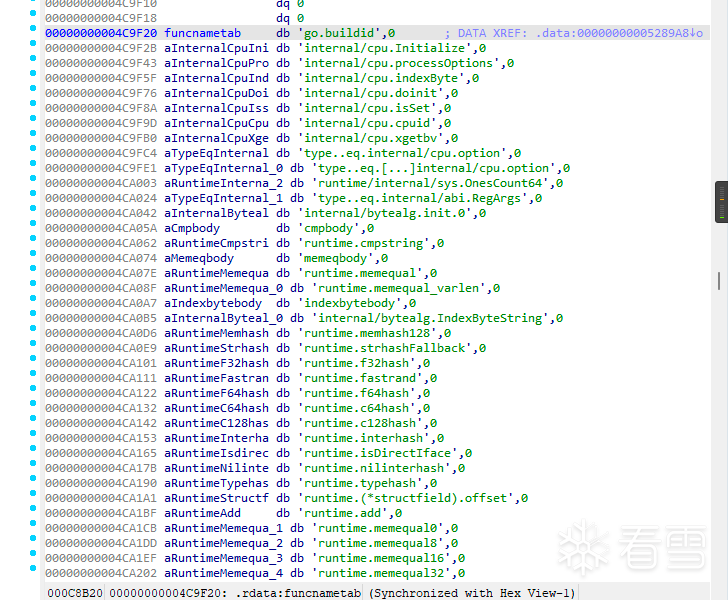
查找交叉引用

go.build 在新版本中一定位于 函數名稱的第一個。
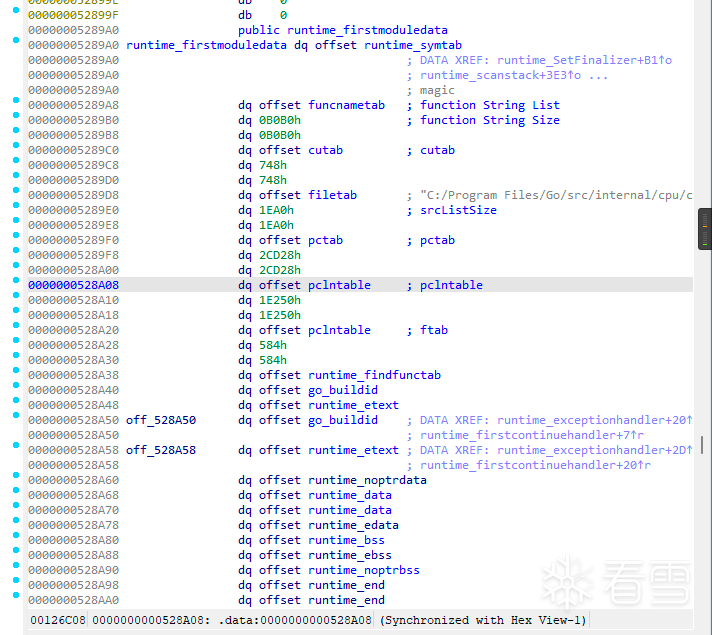
https://go.dev/src/runtime/symtab.go
閱讀源碼,獲取 moduledata 結構
// pcHeader holds data used by the pclntab lookups.
type pcHeader struct {
    magic          uint32  // 0xFFFFFFF0
    pad1, pad2     uint8   // 0,0
    minLC          uint8   // min instruction size
    ptrSize        uint8   // size of a ptr in bytes
    nfunc          int     // number of functions in the module
    nfiles         uint    // number of entries in the file tab
    textStart      uintptr // base for function entry PC offsets in this module, equal to moduledata.text
    funcnameOffset uintptr // offset to the funcnametab variable from pcHeader
    cuOffset       uintptr // offset to the cutab variable from pcHeader
    filetabOffset  uintptr // offset to the filetab variable from pcHeader
    pctabOffset    uintptr // offset to the pctab variable from pcHeader
    pclnOffset     uintptr // offset to the pclntab variable from pcHeader
}
type moduledata struct {
    pcHeader     *pcHeader
    funcnametab  []byte
    cutab        []uint32
    filetab      []byte
    pctab        []byte
    pclntable    []byte
    ftab         []functab
    findfunctab  uintptr
    minpc, maxpc uintptr
    text, etext           uintptr
    noptrdata, enoptrdata uintptr
    data, edata           uintptr
    bss, ebss             uintptr
    noptrbss, enoptrbss   uintptr
    end, gcdata, gcbss    uintptr
    types, etypes         uintptr
    rodata                uintptr
    gofunc                uintptr // go.func.*
    textsectmap []textsect
    typelinks   []int32 // offsets from types
    itablinks   []*itab
    ptab []ptabEntry
    pluginpath string
    pkghashes  []modulehash
    modulename   string
    modulehashes []modulehash
    hasmain uint8 // 1 if module contains the main function, 0 otherwise
    gcdatamask, gcbssmask bitvector
    typemap map[typeOff]*_type // offset to *_rtype in previous module
    bad bool // module failed to load and should be ignored
    next *moduledata
}
pclntable 一般等于 ftab, 參照上圖, ftab 與 pclntable 填充的是 pclntable 的值。
funcnametab 填充的是 函數名稱。
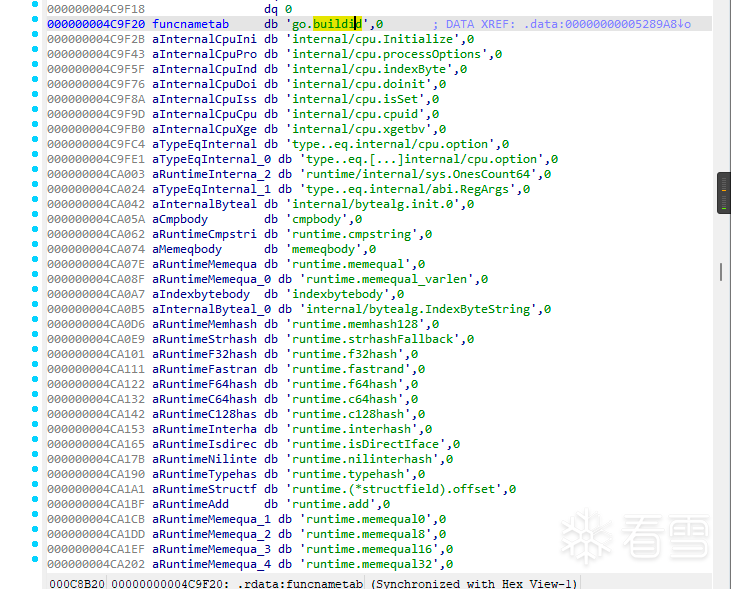
filetab 填充的是 文件名稱。
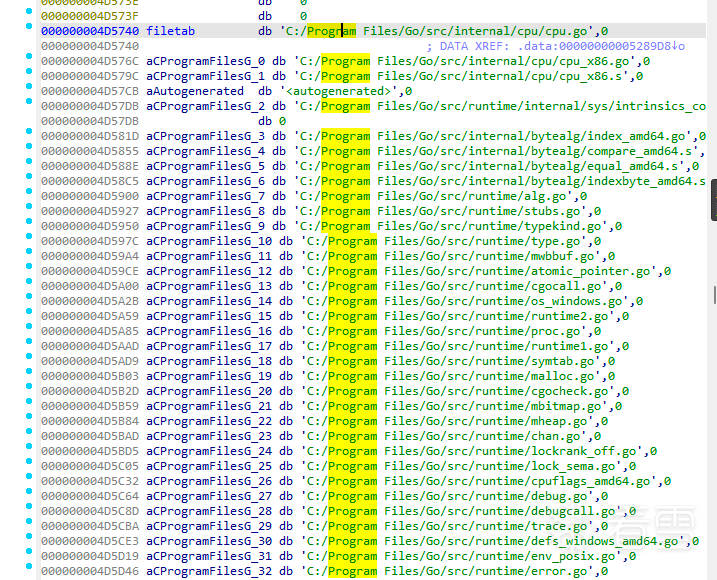
與函數名稱相關的是 ftab 和 pclntable。
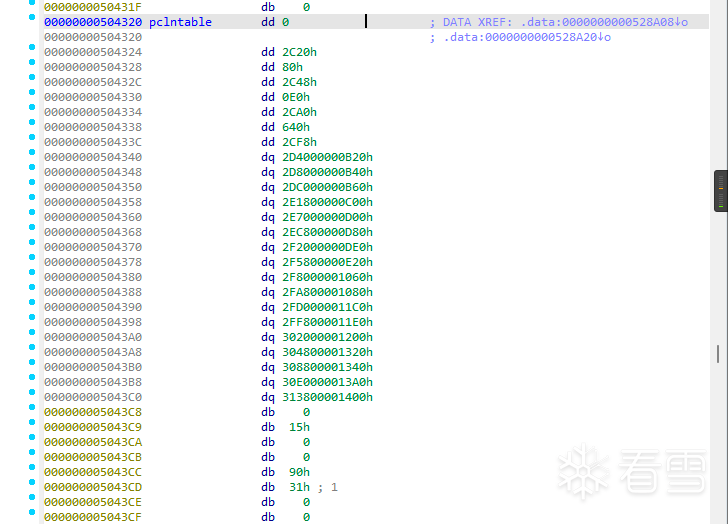
適用于下面的結構體:
type functab struct {
    entryoff uint32 // relative to runtime.text
    funcoff  uint32
}
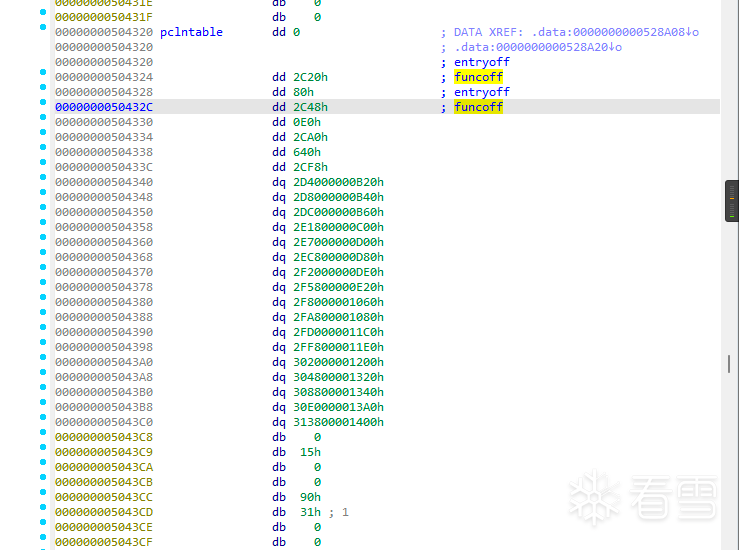
entryoff 為 以代碼段為起始位置 的偏移。表示該函數實際的位置。代碼段在windows為 text。
funcoff 為 以 pclntable 為起始位置的偏移。
//src\runtime\symtab.go
type functab struct {
    entry   uintptr
    funcoff uintptr
}
type funcInfo struct {
    *_func
    datap *moduledata
}
//src\runtime\runtime2.go
type _func struct {
    entry   uintptr // start pc
    nameoff int32   // function name
    args        int32  // in/out args size
    deferreturn uint32 // offset of start of a deferreturn call instruction from entry, if any.
    pcsp      uint32
    pcfile    uint32
    pcln      uint32
    npcdata   uint32
    cuOffset  uint32  // runtime.cutab offset of this function's CU
    funcID    funcID  // set for certain special runtime functions
    _         [2]byte // pad
    nfuncdata uint8   // must be last
}
對應著一個 funcInfo 結構體, 里面包含一個 _func 類型,該類型中有我們想要的信息。
意思就是: func 的 _func = pclntable + funcOff
通過上圖的信息計算:
hex(0x504320 + 0x2c20) = '0x506f40'
hex(0x504320 + 0x2c48) = '0x506f68'
發現剛好可以對得上信息。
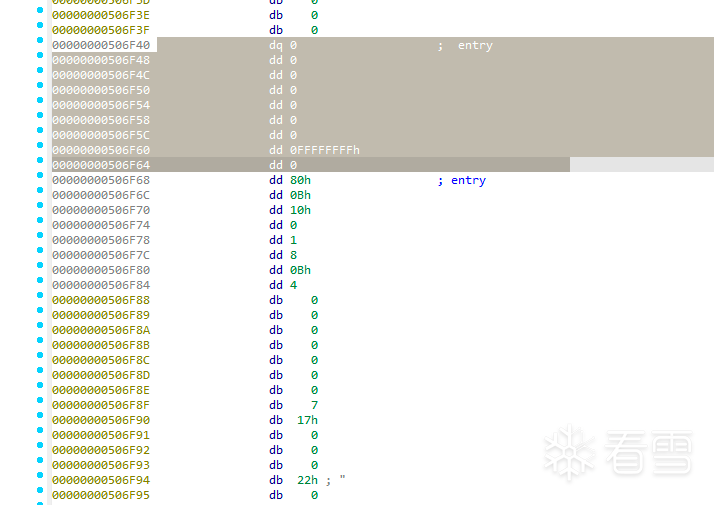
第一個函數 go.build

第二個函數 internal_cpu_Initialize
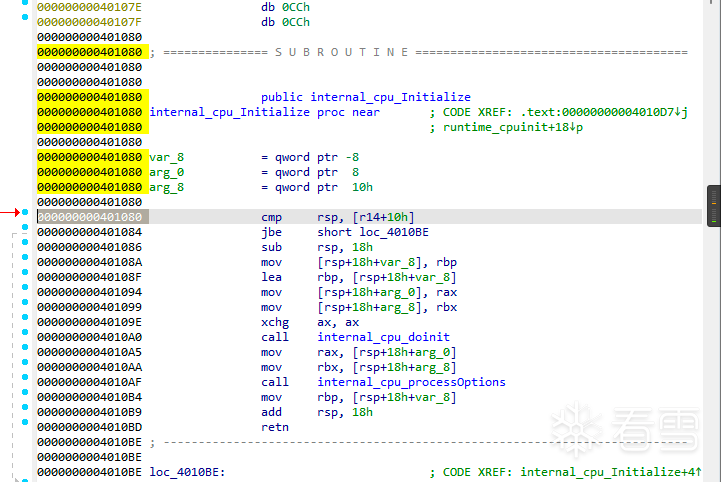
三、輸出腳本
知道了這些就可以編寫簡單的腳本來還原go符號名了。
ida python 腳本
import idc
from idc import *
import ida_nalt
moduledata_addr = 0x05289C0
pcHeader_addr = idc.get_qword(moduledata_addr)
if idc.get_wide_dword(pcHeader_addr) != 0x0FFFFFFF0:
    print(idc.get_wide_dword(pcHeader_addr))
    print("錯誤,并不是一個正確的go文件")
funcnametable_addr = idc.get_qword(moduledata_addr + 8)
filetab_addr = idc.get_qword(moduledata_addr + 8 + ((8*3) * 2))
pclntable_addr = idc.get_qword(moduledata_addr + 8 + ((8*3) * 4))
pclntable_size = idc.get_qword(moduledata_addr + 8 + ((8*3) * 4) + (8 * 4))
set_name(moduledata_addr, "firstmoduledata")
set_name(funcnametable_addr, "funcnametable")
set_name(filetab_addr, "filetab")
set_name(pclntable_addr, "pclntable")
print(pclntable_size)
def readString(addr):
    ea = addr
    res = ''
    cur_ea_db = get_db_byte(ea)
    while  cur_ea_db != 0 and cur_ea_db != 0xff:
        res += chr(cur_ea_db)
        ea += 1
        cur_ea_db = get_db_byte(ea)
    return res
def relaxName(name):
    # 將函數名稱改成ida 支持的字符串
    #print(name)
    if type(name) != str:
        name = name.decode()
    name = name.replace('.', '_').replace("<-", '_chan_left_').replace('*', '_ptr_').replace('-', '_').replace(';','').replace('"', '').replace('\\', '')
    name = name.replace('(', '').replace(')', '').replace('/', '_').replace(' ', '_').replace(',', 'comma').replace('{','').replace('}', '').replace('[', '').replace(']', '')
    return name
cur_addr = 0
for i in range(pclntable_size):
    # 獲取函數信息表
    cur_addr = pclntable_addr + (i * 8)
    # 獲取函數入口偏移
    funcentryOff = get_wide_dword(cur_addr)
    funcoff = get_wide_dword(cur_addr + 4)
    funcInfo_addr = pclntable_addr + funcoff
    funcentry_addr = get_wide_dword(funcInfo_addr)
    funnameoff = get_wide_dword(funcInfo_addr + 4)
    funname_addr = funcnametable_addr + funnameoff
    funname = readString(funname_addr)
    # 真實函數地址
    truefuncname = relaxName(funname)
    truefuncentry = ida_nalt.get_imagebase() + 0x1000 + funcentryOff
    print(hex(truefuncentry), hex(funcoff), hex(funcInfo_addr),hex(funcentry_addr), hex(funnameoff),hex(funname_addr) ,funname)
    # 改名
    set_name(truefuncentry, truefuncname)
#print(hex(cur_addr))
其中 moduledata_addr 需要手動填充。
還原效果
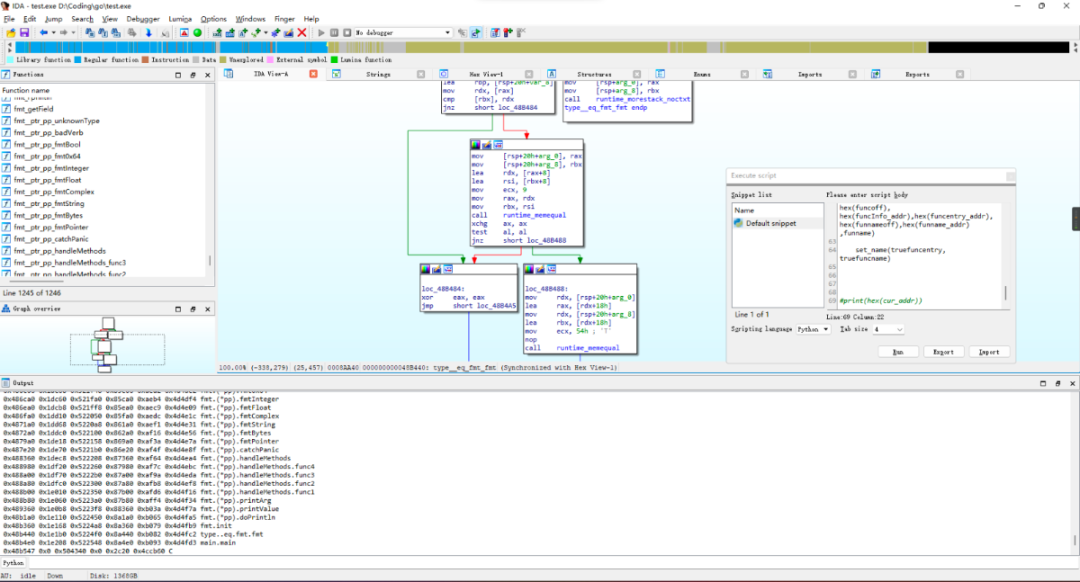
 看雪學苑
看雪學苑
 看雪學苑
看雪學苑
 看雪學苑
看雪學苑
 信息安全與通信保密雜志社
 信息安全與通信保密雜志社
 CNCERT國家工程研究中心
 安全牛
安全牛
 黑白之道
黑白之道
 E安全
E安全
 安全圈
安全圈
 一顆小胡椒
一顆小胡椒
 一顆小胡椒
一顆小胡椒